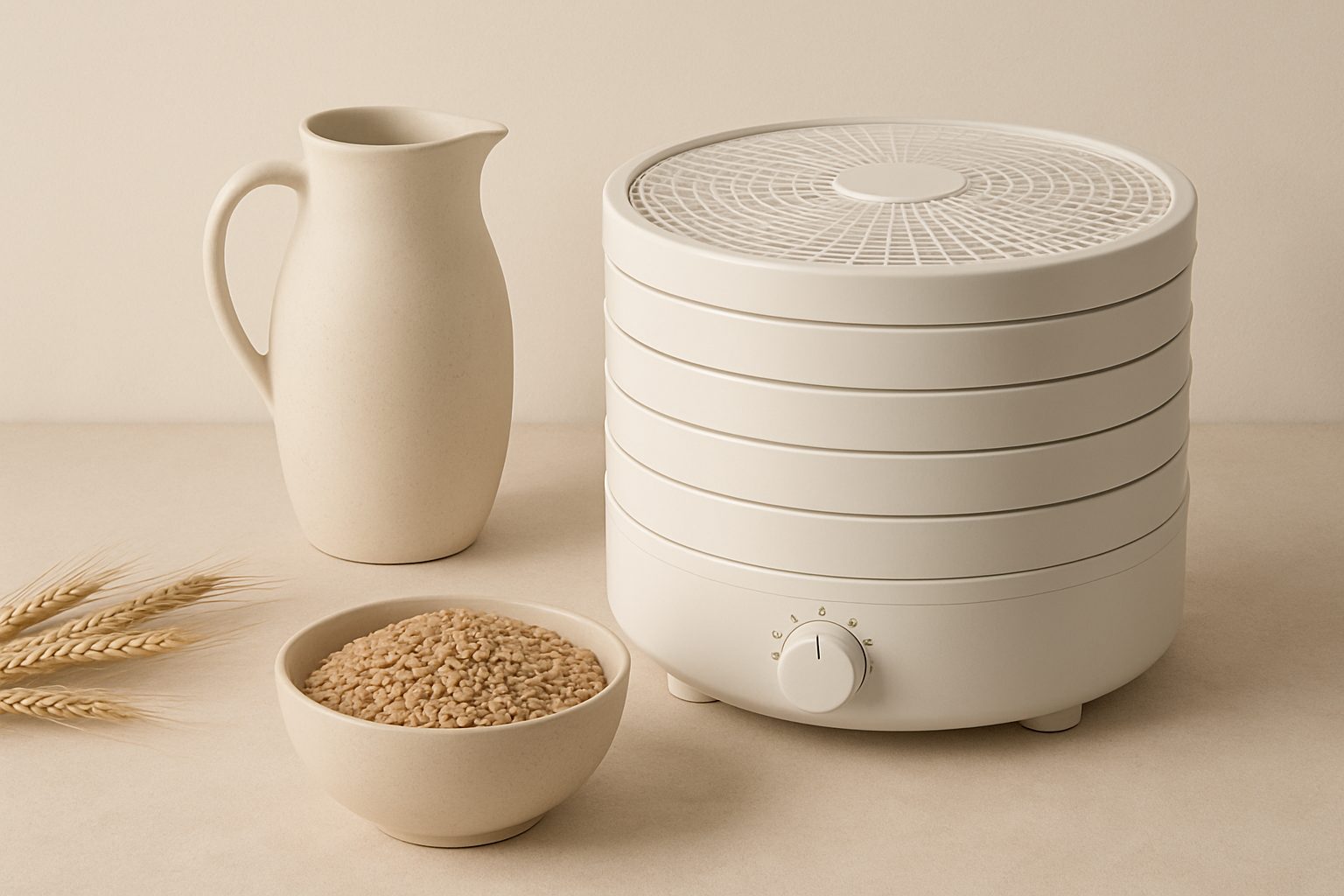
What Size Grain Dryer Do You Need? A UK Self-Sufficiency Sizing Guide
Buying a grain dryer is one of those purchases where getting the size wrong costs you twice: either you're struggling with a machine that can't keep pace with your harvest, or you've spent too much on capacity you'll never use. The right size comes down to three things: how much grain you grow, when you harvest it, and how much time you have to dry it down.
Why capacity matters more than you think
A grain dryer's capacity is measured in kilograms per hour—how much wet grain it can dry from field moisture to storage condition in 60 minutes. This isn't just a comfort metric. If your dryer is too small, harvested grain sits in damp conditions where it moulds, loses germination, or attracts insects. If it's oversized, you've tied up thousands of pounds in equipment you're underutilising and paying to maintain year-round.
For UK growers, this is especially important because our harvest window is often compressed. Unlike continental climates with six weeks of reliable dry weather, you might have a ten-day window where conditions are dry enough to cut. A dryer that's too small turns that window into a bottleneck.
Calculate your actual drying load
Start with your annual grain harvest in kilograms. Be honest here—many UK smallholders aim for 500 kg to 2 tonnes per year, though this varies wildly depending on plot size, crop, and yield.
Next, decide how concentrated you want your drying. Most smallholders work with a 5–10 day harvest period. If you harvest 1,000 kg over 7 days, that's roughly 140 kg per day. But you won't harvest every day—weather delays are standard. Realistically, drying happens over 4–5 actual working days.
So: 1,000 kg ÷ 5 days = 200 kg per day.
Now the crucial bit: grain drying isn't a continuous 24-hour operation for most home growers. You'll run your dryer in batches—typically 4–6 hours per day if you're also working on other things, longer if you're committed. If you run it for 6 hours daily:
200 kg ÷ 6 hours = 33 kg per hour capacity needed.
A rough rule of thumb: smallholders with 500–1,500 kg annual harvest typically need 20–60 kg/hour. Larger operations (2–4 tonnes) look at 60–120 kg/hour.
The moisture-content factor
Drying capacity depends on how wet your grain is when it enters the dryer. UK-harvested grain often comes in at 18–22% moisture content. Drying down to 13–14% (safe storage) removes a lot of water. A 50 kg/hour dryer working with very wet grain (22%) removes less absolute moisture than the same dryer on drier grain (17%).
If you're cutting early to beat wet weather, expect longer drying times. If you wait for drier conditions, the same dryer works faster. This is why "what's my throughput?" isn't a fixed answer—it depends on your timing strategy.
Common capacity ranges in the UK market
Small-batch dryers (15–30 kg/hour): Suit hobby growers and experimental plots. Typically air-heated or low-cost electric models. Realistically, a 20 kg/hour dryer handling 500 kg of wet grain needs 25 hours of running time—about a week of 4-hour sessions.
Mid-range dryers (40–80 kg/hour): The sweet spot for dedicated smallholders. Will handle 1–2 tonnes in a reasonable timeframe. Often use a combination of solar heating and electric backup, important for UK spring and autumn drying.
Large-capacity dryers (100+ kg/hour): Unnecessary for most home-scale growers unless you're also processing for neighbours or running a small milling operation. Capital and running costs jump significantly.
Practical UK considerations
Space and utilities. Even compact dryers need floor space—typically 1–2 square metres for anything over 30 kg/hour. Electricity demand matters: larger dryers run 3–5 kW when heating. Check your incoming supply can handle this without tripping; some rural locations have limited capacity.
Weather-dependent drying windows. UK drying seasons are shorter than elsewhere. Summer for early wheats and barleys, autumn for later crops. This argues slightly toward a larger capacity than your "average" maths suggests—you need to finish within the weather window, not finish eventually.
Grain type. Wheat and barley are the UK standards and work well in most dryers. Oats dry faster and need gentler handling. Beans and pulses have different drying requirements. A dryer sized for wheat might feel slow with oats, and vice versa.
Don't go tiny, don't overspend
The most common mistake is underestimating batch volume. Growers think "I only harvest 300 kg" but then find they're hand-feeding a 15 kg/hour dryer for weeks when they could've batch-dried in days. Doubling your estimate costs maybe 20–30% more upfront but saves weeks of labour and spoilage risk.
The second mistake is assuming bigger is free. A 120 kg/hour dryer that sits idle eleven months of the year is dead money. It also needs more maintenance and storage.
Next steps
Before shopping, write down three numbers: your expected annual harvest (kg), your typical harvest period (days), and how many hours per day you can operate the dryer. That gives you a realistic capacity target. Then compare that to the specific models available in the UK market—look at local supplier specifications, not overseas reviews, because moisture content and heating efficiency vary with climate.
If you're between two sizes, favour the slightly larger one. If you're genuinely unsure, start with smaller capacity and plan to add a second unit later if needed—easier than selling an oversized dryer at a loss.
More options
- Electric Grain / Seed Dryer (Tabletop) (Amazon UK)
- Digital Grain Moisture Meter (Amazon UK)
- Airtight Food-Grade Grain Storage Buckets & Bins (Amazon UK)
- Inline Centrifugal Fan for Grain Drying (Amazon UK)
- Digital Thermostat Temperature Controller (Amazon UK)