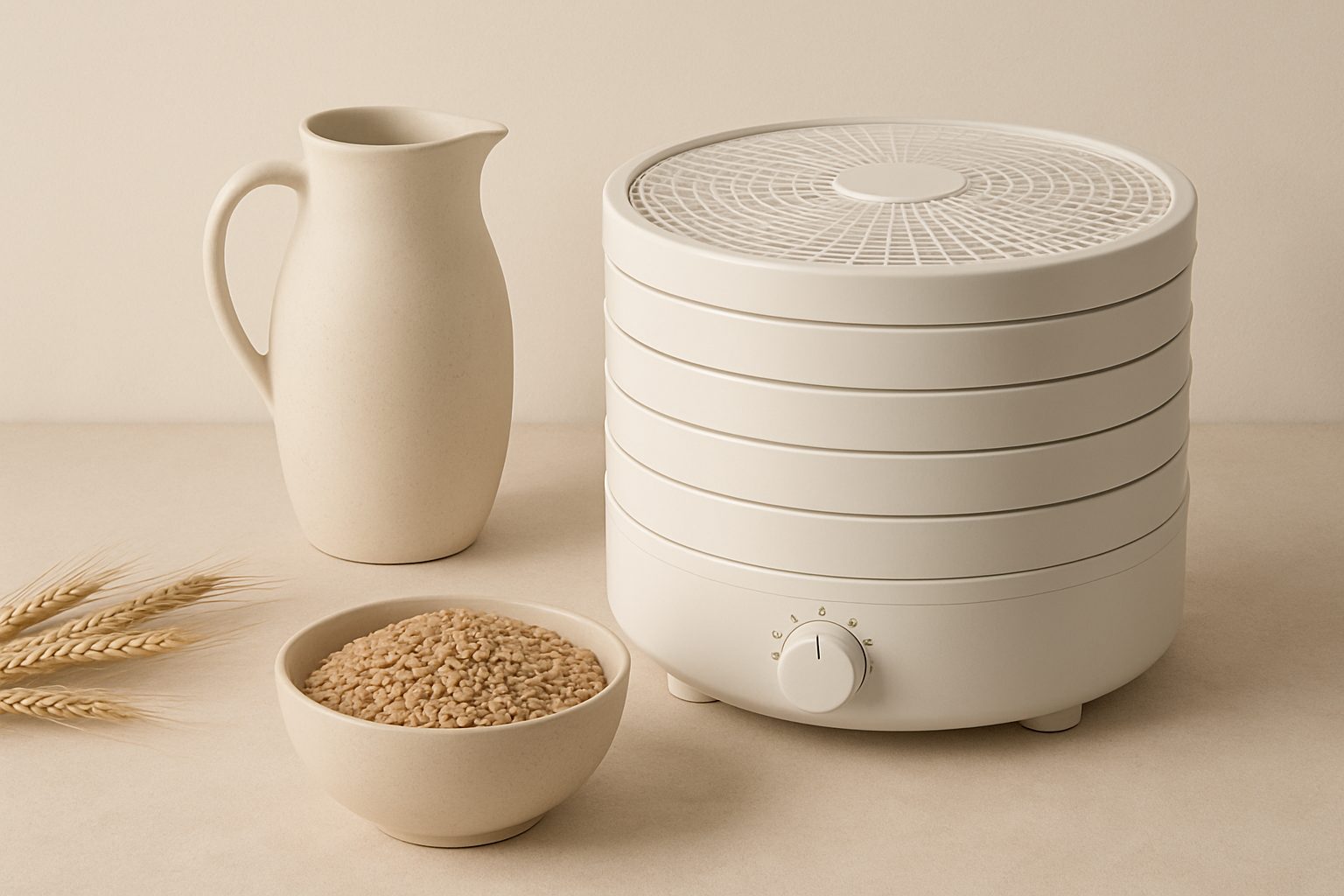
How Does a Grain Dryer Work? A Plain-English Explanation
If you've grown grain — wheat, barley, oats, or anything else — you'll know that harvest timing is a gamble. Pick too early and the grain is too damp to store safely. Wait too long and weather can spoil the crop. A grain dryer bridges that gap. Rather than crossing your fingers and hoping for a few weeks of fine weather, a grain dryer lets you harvest when the crop is ready and dry it down to a safe moisture level on your own schedule.
But how do they actually work? The mechanics are simpler than most people think, built on three basic principles: heat, moving air, and the way moisture behaves in grain.
Why Grain Needs to Be Dry
Freshly harvested grain contains a lot of water — often 20 to 25 per cent or higher, depending on the crop and conditions. Grain won't keep at that moisture level. Moulds and bacteria thrive in damp grain, and the grain itself continues to respire, burning through its own energy reserves. Within weeks, stored wet grain can heat up, become infested, or simply rot.
Safe storage moisture varies by grain type — wheat typically wants to be around 13 to 15 per cent, while barley and oats are similar — but the principle is the same. Get the moisture down, and your grain stays sound for months or even years.
The Three Things a Grain Dryer Does
A grain dryer works by removing water from grain through three simultaneous processes: heating the grain, removing the surrounding air, and allowing moisture to evaporate.
Heat is the engine. Warm air can hold more moisture than cold air. When you heat grain, the water inside it becomes more willing to evaporate. You don't need dramatic temperatures — most grain dryers operate at 40 to 60 °C, well below the point where the grain itself is damaged.
Air movement is the transport system. Once moisture evaporates from the grain, it needs somewhere to go. Moving air carries that moisture away, continuously replacing the air around the grain with drier air. Without airflow, the air around the grain would quickly become saturated with moisture and drying would stall.
Equilibrium moisture is the destination. Grain and air naturally exchange moisture until they reach a balance. A grain dryer creates conditions — warm, dry air flowing through the grain — that push this equilibrium down to your target moisture level.
How a Typical Grain Dryer Works in Practice
Most home and farm grain dryers follow a straightforward design. Grain is loaded into a bin or chamber. A heater warms air to the target temperature — usually between 40 and 60 °C for most grains. A fan pushes that warm air up through the grain from below, or sometimes from the side, depending on the design.
As the warm air passes through the grain, moisture evaporates from each kernel. The now-damp air rises out through the top of the dryer and is vented outside, carrying the moisture with it. Fresh, dry air is drawn in to replace it.
Grain sits in the dryer for hours — the exact time depends on starting moisture, target moisture, air temperature, and airflow rate. A common rule of thumb is that you can remove roughly one percentage point of moisture per hour, though this varies considerably based on conditions and grain type.
Most dryers have a moisture sensor built in or a port for one. This lets you monitor progress without guessing. When the grain reaches your target moisture level, you stop the dryer and unload.
Batch Dryers vs. Continuous Flow
Small-scale home dryers are usually batch dryers — you load grain, dry it, and unload it. The whole batch sits still while air moves through it. This is straightforward and gives you control over exactly when each batch is done.
Larger systems sometimes use continuous flow designs, where grain slowly descends through a drying chamber whilst warm air flows upward. These are faster for high volumes but require more space and are less common for home use.
Key Components That Matter
Even if you're not building one yourself, understanding the components helps you judge a dryer's quality:
- The heater — usually either electric or burning gas or oil. Higher wattage or BTU output means faster drying, but also higher running costs.
- The fan — responsible for airflow. A larger, more powerful fan moves air faster and more evenly through the grain, speeding drying and reducing the risk of uneven moisture in the finished batch.
- Insulation — keeps heat inside the dryer rather than wasting it. Better insulation means lower running costs.
- Moisture sensor — without one, you're drying blind. A good sensor tells you when you've hit your target and saves money by preventing over-drying.
- Thermostat or controller — maintains consistent temperature, preventing damage from overheating.
What Temperature and Time Really Mean
Temperature alone doesn't tell you much — a dryer running at 50 °C for 6 hours will produce very different results depending on humidity, airflow, and grain depth. What matters is the combination of heat, airflow, and time.
Drying is also never perfectly uniform. Grain at the edges of the dryer tends to dry faster than grain in the centre. Good design minimises this, but it's worth being aware of if you're comparing dryers or planning to check moisture manually before unloading.
Moisture Equilibrium and Why It Matters
Here's a subtle but important point: grain won't dry below the equilibrium moisture level for the air passing through it. If the air coming into your dryer is 30 per cent moisture (humid day, no dehumidification), your grain won't dry below about 15 per cent no matter how long you run it. This is why drying is faster and cheaper on dry days, and why some serious operations use additional dehumidification equipment.
For most home growers in the UK, this means starting your drying cycle on a dry day if you can — your dryer will work more efficiently.
The Bottom Line
A grain dryer removes moisture by heating grain and blowing dry air through it, carrying moisture away. The process is reliable, repeatable, and lets you harvest on your own schedule rather than waiting for the weather to cooperate. Understanding how your dryer works — why temperature and airflow matter, what equilibrium moisture means — helps you use it efficiently and get consistently good results year after year.
More options
- Electric Grain / Seed Dryer (Tabletop) (Amazon UK)
- Digital Grain Moisture Meter (Amazon UK)
- Airtight Food-Grade Grain Storage Buckets & Bins (Amazon UK)
- Inline Centrifugal Fan for Grain Drying (Amazon UK)
- Digital Thermostat Temperature Controller (Amazon UK)