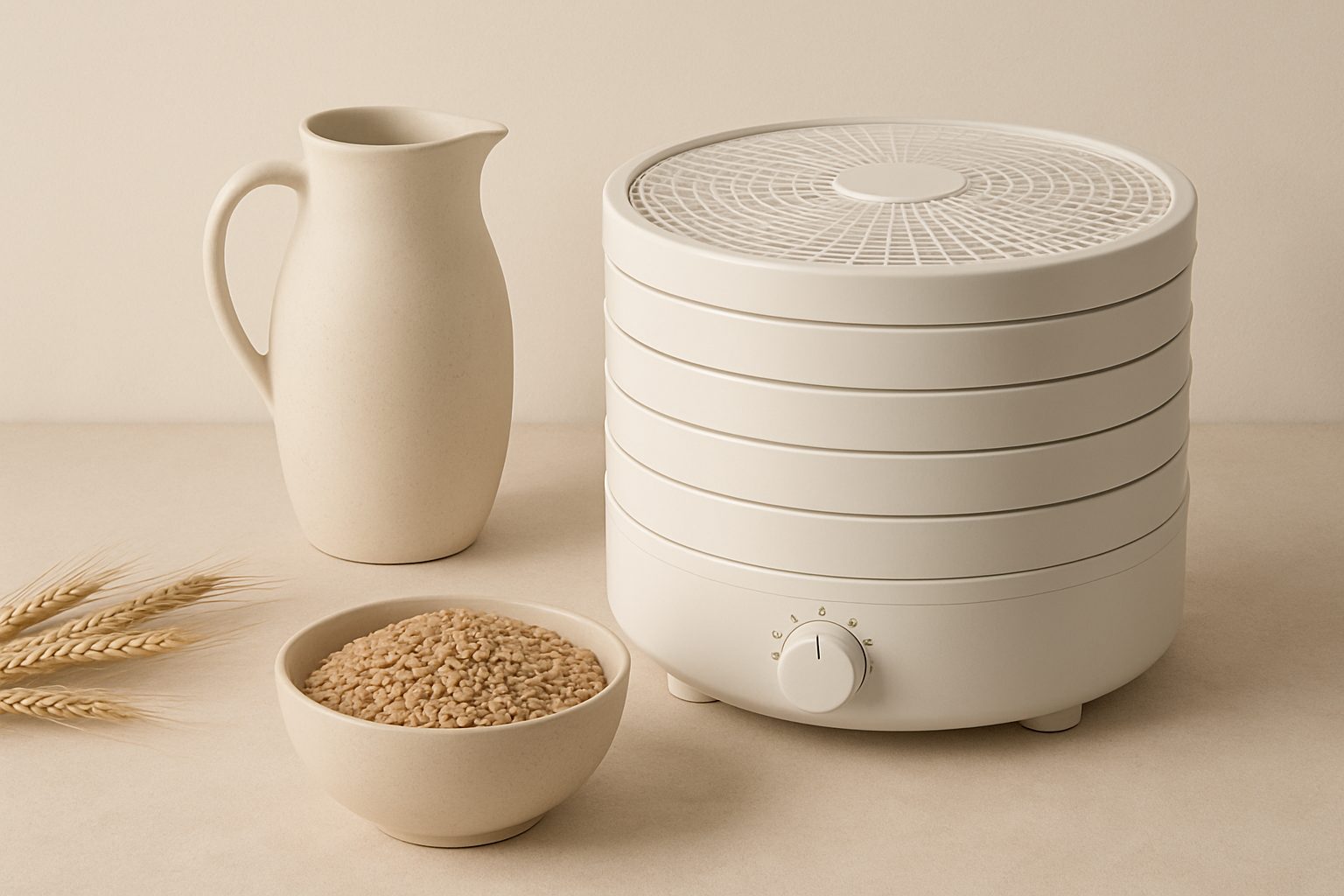
Grain Drying Temperature Guide: Safe Levels for Wheat, Barley, Oats & Spelt
Drying grain safely at home or on a small holding depends on understanding one critical variable: temperature. Dry too fast at high heat and you'll crack the grain, ruin viability if you're saving seed, or develop uneven moisture that invites mould. Too slow or too cool and you'll wait weeks, risk spoilage, or waste heating energy. This guide sets out the safe temperature ranges for the four most common grains UK growers work with.
Why Temperature Matters in Grain Drying
Temperature controls how quickly moisture moves from the centre of each grain to the surface, where it evaporates. It's not just about speed. Grain kernels are hygroscopic—they absorb and release moisture depending on the air around them. High temperature with low humidity pulls moisture out quickly, but if the grain's surface dries faster than the interior, stress cracks develop. These reduce milling quality, spoil germination potential, and create entry points for insects and fungi during storage.
The other critical factor is air velocity. A dryer that moves warm air through the grain mass ensures even drying and prevents localised moisture pockets. Temperature alone, without proper airflow, won't give reliable results.
Safe Drying Temperatures by Grain Type
Wheat
Wheat is reasonably forgiving. For storage grain (milling, animal feed, or long-term keeping), you can dry wheat at temperatures up to 43°C without risk of damage. Most small-scale grain dryers in the UK operate in the 35–42°C range, which balances speed with safety.
If you're drying wheat for seed—either for next season's planting or to sell—drop to 40°C maximum. Below 35°C is safest for seed, though drying takes longer.
Target final moisture content for wheat: 13–14% for storage, 12% or lower if you're keeping it for five years or more.
Barley
Barley is more sensitive than wheat. The grain's thinner hull and tighter kernel mean moisture stress causes damage more easily. Keep drying temperatures at 40°C maximum for malting barley (if that's your end use), and 43°C for feed or storage barley.
Seed barley should not exceed 38°C. Barley loses viability quickly if dried too aggressively, so patience is worth it if germination matters.
Target final moisture content for barley: 13–14% for storage, 12% for longer-term keeping or seed.
Oats
Oats sit between barley and wheat in terms of sensitivity. The loose hull protects the kernel somewhat, but they still benefit from gentle drying. Aim for 40°C maximum for most oat drying, though 43°C is acceptable if you're only storing for a season or two.
Seed oats should stay below 38°C.
Target final moisture content for oats: 12–13% for storage. Oats deteriorate faster than wheat or barley, so don't overdry; aim for 12% rather than pushing lower.
Spelt
Spelt's hulled structure gives it unique requirements. The grain is encased in a tough hull that actually insulates it slightly, but the hull can also trap moisture. Dry spelt at no more than 40°C, and use a low-speed airflow to avoid cracking the fragile kernel inside.
If you're keeping spelt for seed or specialty milling, stick to 38°C.
Target final moisture content for spelt: 12–13%. Spelt stores reasonably well, but uneven drying leads to quality loss, so aim for consistency over speed.
Understanding Final Moisture Content
A grain moisture meter is essential. You can't judge final moisture by feel or sight reliably. Most UK agricultural suppliers stock digital grain moisture meters (around £50–150). These give you the moisture percentage—readings below the target mean you've dried enough, readings above mean more time in the dryer.
Setting Up for Success
The most common mistake is running the dryer too hot and too fast. A small batch dried at 50°C might be ready overnight, but you'll have cracked grain and poor storage life. Slower and cooler—24 to 48 hours for a small batch—gives far better results.
Ensure your dryer has a thermostat that you can verify (thermometers are cheap and worth fitting separately). Air velocity should be steady; if the dryer has a variable-speed fan, set it so the grain stirs gently without blowing dust around.
Check moisture levels partway through. If you're drying 100 kg of wheat and you check after 12 hours and it's already at 14%, you can stop. If it's still at 18%, you know you've got time to go.
Temperature fluctuation across the dryer is normal. Grain nearest the heat source dries fastest. A well-designed dryer minimises this through baffles and even airflow, but some variation is expected.
Seasonal Differences
UK weather affects drying speed significantly. Autumn drying (September to November) is slower than summer because ambient humidity is higher. You may need 50% more time to reach target moisture in October than in July. Conversely, you may need to be more careful about over-drying in summer when humidity is very low and fast drying is easy.
Storage After Drying
Once you've reached target moisture, cool the grain to room temperature before bagging or binning. Storing warm grain traps moisture inside, undoing your drying work. Most dryers finish with a cooling phase—stick with it rather than rushing to move the grain.
For detailed guidance on grain-specific dryer selection, see our wheat dryer article, barley drying guide, or thermostat and monitoring accessories.
Store in clean, cool, dry conditions. Properly dried grain at 13–14% moisture, kept cool and protected from damp, will stay sound for two to three years without issue.
More options
- Electric Grain / Seed Dryer (Tabletop) (Amazon UK)
- Digital Grain Moisture Meter (Amazon UK)
- Airtight Food-Grade Grain Storage Buckets & Bins (Amazon UK)
- Inline Centrifugal Fan for Grain Drying (Amazon UK)
- Digital Thermostat Temperature Controller (Amazon UK)