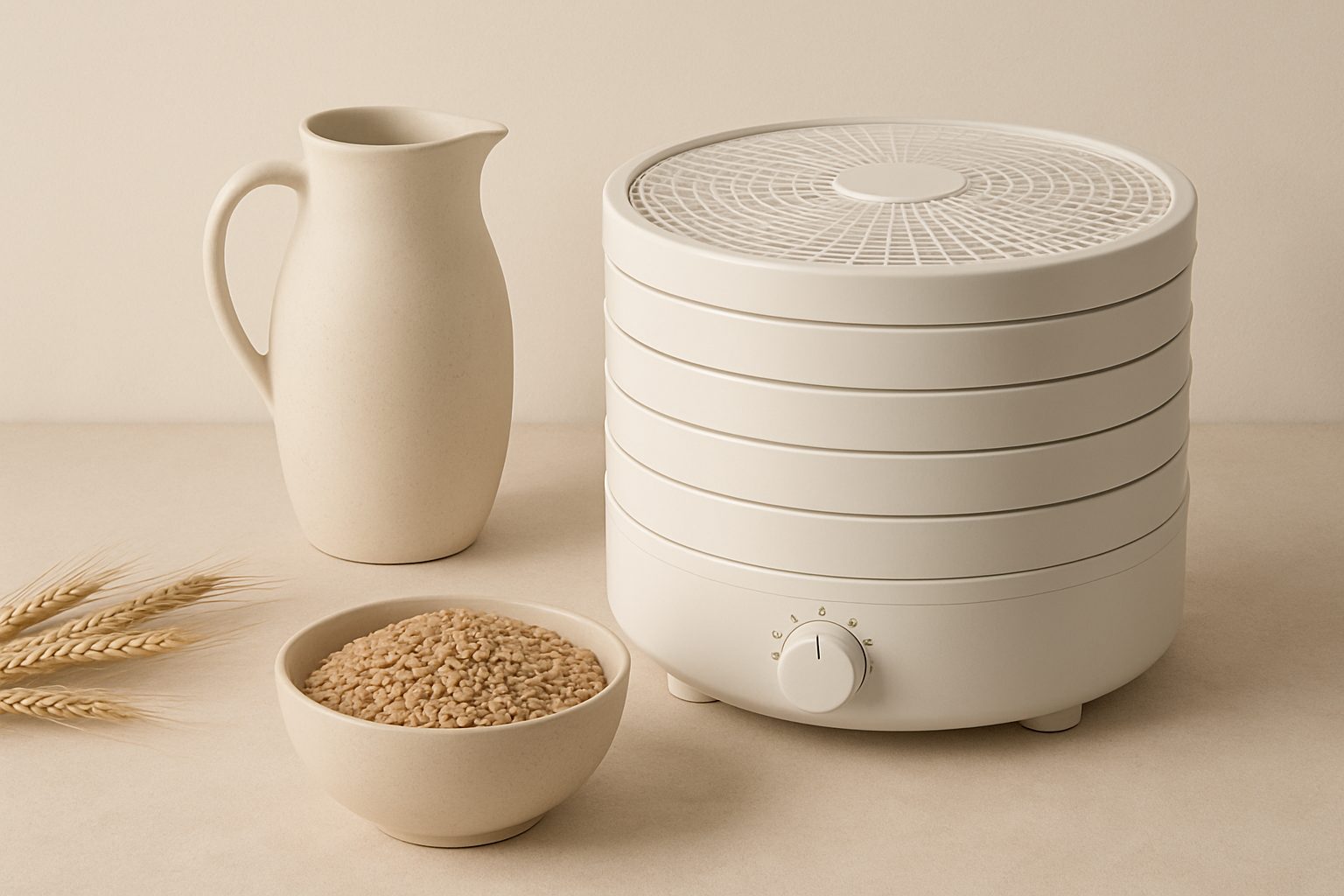
Electric Tabletop Grain Dryer for Allotment Growers UK: Best Compact Options
Growing your own grain on an allotment is increasingly popular, but harvesting is only half the battle—getting your crop dry and stored properly determines whether you'll have usable grain or mouldy loss. For small-scale growers working with batches under 10 kg, a tabletop electric grain dryer is the practical middle ground between messy air-drying outdoors and the expense of commercial equipment.
Why electric drying matters for allotment-scale grain
When you cut grain by hand or with a small harvester, the moisture content typically sits between 20% and 25%. You need to get it down to around 13-14% for safe long-term storage, otherwise fungi and insects will colonise your crop. Air-drying works but takes weeks, depends on British weather (not reliable), and leaves grain vulnerable to pests and damp.
A tabletop electric dryer solves this. It gently circulates warm air through your grain, reducing moisture in 6 to 12 hours depending on starting conditions and batch size. This is genuinely useful if you're growing wheat, barley, oats, or specialty grains like spelt or quinoa for your own use or small-scale selling.
What to expect from budget tabletop models under £200
The honest truth: you're not getting precision commercial equipment at this price point. What you are getting is a fan-assisted box with a heating element and temperature control. Entry-level models typically offer:
- Capacity: 5–8 kg per batch (sometimes marketed as 10 kg, but that's optimistic for thorough drying)
- Temperature range: Usually fixed at 40–50°C, or with basic dial adjustment
- Drying time: 8–14 hours depending on starting moisture and grain type
- Noise: 60–70 dB—noticeable but acceptable in a shed
- Power draw: 600–1000 watts
These units work. They're not fancy, but they deliver consistent results if you use them correctly.
Key differences between decent and disappointing models
Air circulation quality matters most. Cheap models with a single small fan can create hot spots where grain dries unevenly or even toasts slightly. Better units have a stronger fan and baffles to distribute heat more evenly. Look for models that position the heating element away from the grain bed itself.
Temperature control varies wildly. Budget models might have no adjustment at all, or a basic rheostat dial with no temperature readout. More useful mid-range options (£150–£200) include a thermostat that switches the heater on and off, preventing over-drying and reducing power use. Over-dried grain becomes brittle and loses nutritional value.
Build durability is worth considering. Metal housings are better than plastic because they handle humidity better and last longer. Check that the heating element is enclosed or protected—you don't want grain dust igniting.
Realistic workflow for allotment growers
You'll get the best results if you:
- Spread grain thinly on a clean surface to remove obvious debris and assess moisture visually. Well-ripened grain should bend without cracking when you bite it.
- Load your dryer in layers or batches rather than overfilling. A 6 kg batch dries much more evenly than forcing 10 kg through.
- Monitor progress by pulling out a small sample every 3–4 hours and checking feel and flexibility. Grain is ready when kernels resist cracking between your teeth and feel glassy rather than chewy.
- Cool before storing. Let dried grain sit in a sealed container for 24 hours to equalise moisture before transferring to long-term storage. This prevents condensation damage.
- Use a moisture meter to verify you've hit your target. A basic handheld grain moisture meter costs £30–£60 and removes guesswork. This is especially useful if you're selling grain or storing large quantities.
Storage containers and complementary equipment
Once your grain is dry, storage is critical. Airtight containers with tight-sealing lids—food-grade buckets or purpose-built grain bins—prevent re-absorption of moisture and keep out pests. For allotment-scale quantities (20–100 kg total), 20 litre food containers or smaller Tupperware-style boxes work well, costing £10–£30 per container.
Add silica gel packets or food-grade desiccant if you're storing long-term in a damp environment like an allotment shed. A basic moisture meter also becomes essential if you're storing grain beyond a season—it tells you if your storage is working or if your grain is getting damp again.
Realistic limitations
These tabletop units aren't designed for continuous commercial use. If you're drying grain weekly, they'll work, but they'll wear out faster than industrial equipment. They're also slower than larger dryers, so batching becomes important.
They also struggle with very wet grain. If your harvest is 28–30% moisture (common after rain), expect drying to take closer to 16–20 hours and results to be less predictable. For chronically wet conditions, you might need to air-dry for a few days first.
Where to find decent options
UK suppliers like agricultural merchants, specialist garden retailers, and online platforms stock tabletop grain dryers, though selection is limited compared to European markets. Prices vary by brand and thermostat quality, with reputable models running £120–£190. Don't assume the cheapest option is bad—some no-frills models are genuinely reliable—but if a dryer seems suspiciously cheap (under £80), check reviews carefully for burn-out and heating issues.
The verdict
For an allotment grower wanting to move beyond air-drying but without the space or budget for serious equipment, a tabletop electric grain dryer under £200 is a practical investment. Pair it with a moisture meter and proper storage containers, and you'll have grain that stays dry and usable for months. You won't be using it continuously, and it won't handle huge batches, but that's fine—it's sized for allotment reality, not commercial farming.
More options
- Electric Grain / Seed Dryer (Tabletop) (Amazon UK)
- Digital Grain Moisture Meter (Amazon UK)
- Airtight Food-Grade Grain Storage Buckets & Bins (Amazon UK)
- Inline Centrifugal Fan for Grain Drying (Amazon UK)
- Digital Thermostat Temperature Controller (Amazon UK)