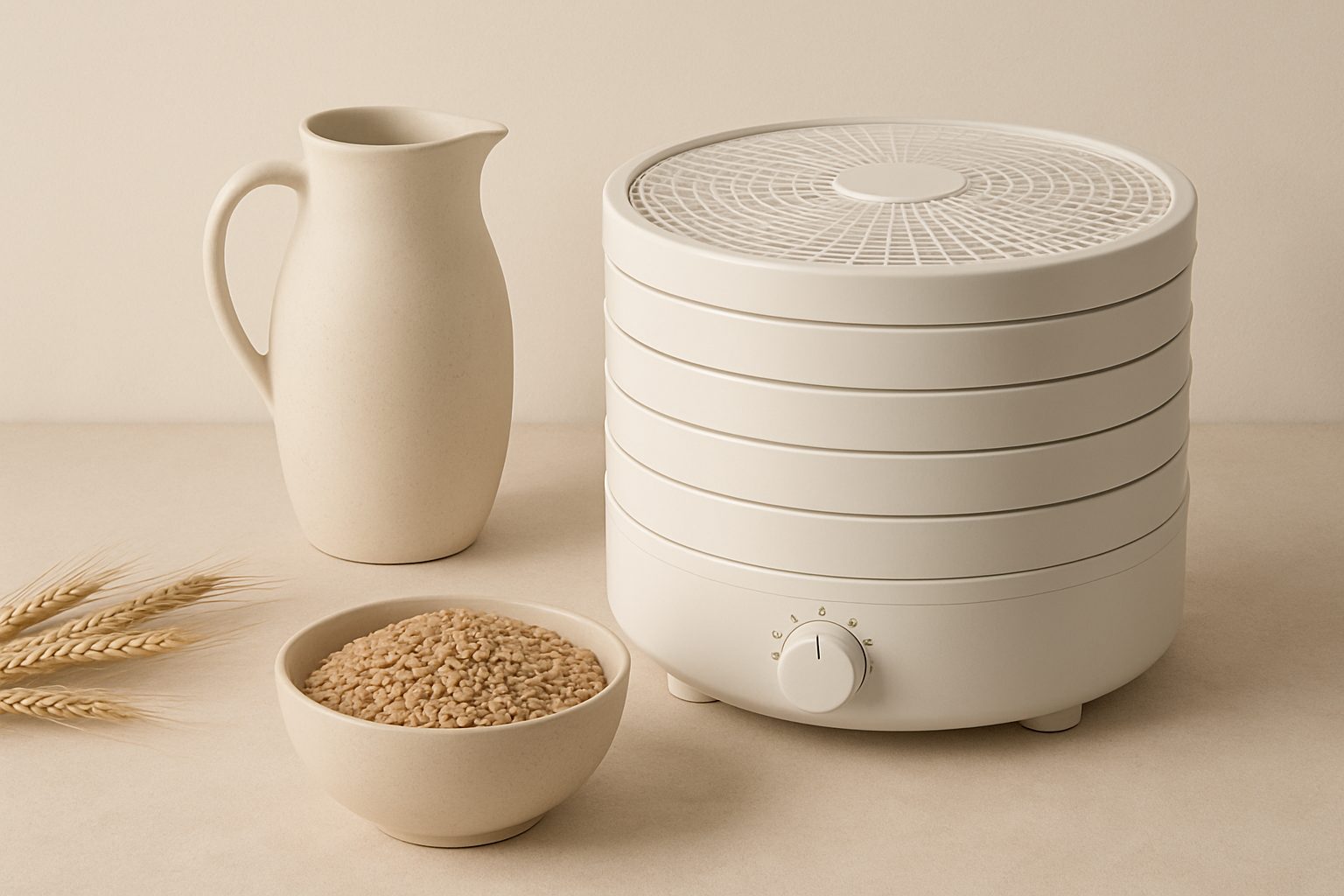
Drum Dryers vs Flat-Bed Dryers UK: Which Is Better for Small Batches?
If you're running a small grain operation in the UK—whether you're a hobby farmer, microbrewer, or artisan miller—choosing between a drum dryer and a flat-bed dryer is one of the first decisions you'll face. Both work, but they excel in different situations. The right choice depends on your batch size, grain type, budget, and how much time you want to spend managing the drying process.
How They Work
Drum dryers use a rotating, heated cylinder. Grain falls through as the drum turns, tumbling continuously. Heat sources vary—some use direct flame, others electric or biomass heating. The constant movement means grain passes through different temperature zones, creating a gentle drying effect if done right.
Flat-bed dryers are stationary boxes with grain spread across a perforated floor. Heated air blows up through the grain from beneath. Some models use reversing fans to stir the grain occasionally; others require manual turning with a rake or auger system. Temperature control is more straightforward than drums.
Evenness of Drying
This is where the two diverge noticeably.
Flat-bed dryers, especially larger commercial models, can struggle with even drying across the entire batch. Grain near the air inlet dries faster than grain at the far end. If you're not regularly turning or reversing airflow, you'll end up with overdried material near the source and underdried material elsewhere. Small batches help here—less grain means fewer dead zones.
Drum dryers handle this better inherently. The rotating action naturally mixes grain, and heat is applied more uniformly around the perimeter. For even drying across a batch, drum dryers have a real advantage, particularly if your grain is prone to case hardening (where the outside dries before moisture escapes the centre).
That said, poorly designed or overstocked drum dryers can still create hot spots. Quality matters.
Grain Damage
Here's the critical trade-off.
Flat-bed dryers inflict minimal physical damage. Grain simply sits there—no mechanical stress, no tumbling. For delicate grains or seed that needs to stay viable, flat-beds win decisively.
Drum dryers work grain harder. The constant rotation and impact against the drum wall can crack, chip, or bruise kernels. How much damage occurs depends on drum speed, temperature, and resident time. Faster drum speeds and longer drying times worsen it. For brewers, this matters less; for seed producers or artisan millers selling whole grains, it's significant.
That said, modern small-batch drum dryers are gentler than industrial models. Speed and temperature controls let you dial in a more forgiving dry.
Ease of Cleaning
Flat-beds are simpler. Grain in, grain out. Some residue settles, which you sweep or blow out. No hidden corners, no moving parts to disassemble. Cleaning takes 20 minutes.
Drum dryers are fiddlier. Grain dust and debris collect inside the rotating drum, especially in the seams and around the heating element. You'll need to disassemble or physically access the interior regularly. For small batches, this might only be a few times per season, but it's labour-intensive. Some newer models have better access panels, which helps.
If you're drying different grain types successively, cross-contamination risk is higher with drums—cleaning between batches demands more diligence.
Cost and Space
Flat-bed dryers tend to be cheaper upfront, especially for small batches. A basic 1-tonne capacity flat-bed runs £1,500–£3,500. They're compact and don't require reinforced flooring.
Drum dryers cost more. A small-batch drum (500–1,000 kg) typically starts around £3,000–£6,000 depending on heating method. They're louder and require more robust installation due to vibration and weight distribution.
Operating costs depend on heating method, but drum dryers, if electric, can be pricier to run due to the rotation motor and continuous drum heating. Flat-beds use less overall energy if you're not running the reversing fan constantly.
Which Is Better for Small Batches?
Choose a drum dryer if:
- You need consistent evenness across the batch and don't have time for manual turning.
- You're drying large seeds, malting grains, or anything that benefits from gentle, even heat.
- Grain damage is acceptable (brewing, animal feed, distilling).
- You have the budget and space for installation and maintenance.
Choose a flat-bed dryer if:
- You're on a tight budget and don't mind periodic manual management.
- Grain integrity is paramount (seed, specialty milling, high-value varieties).
- Your operation is truly small—under 500 kg per batch—where evenness is less critical.
- You want simplicity and minimal mechanical fuss.
- You're drying multiple grain types and need easy between-batch cleaning.
The Practical Middle Ground
Many small-scale UK operators compromise: a small flat-bed for delicate or low-volume work, paired with a drum for higher-volume batches where even drying and throughput matter more than perfection. If budget allows, this hybrid approach covers most real-world scenarios.
Start with your primary grain type, batch frequency, and non-negotiables. For seed and specialty grains, the flat-bed's simplicity and gentleness usually wins. For brewing, malting, or feed, the drum's efficiency and evenness justify the cost and complexity. Scale and handling capacity should inform your final decision.
More options
- Electric Grain / Seed Dryer (Tabletop) (Amazon UK)
- Digital Grain Moisture Meter (Amazon UK)
- Airtight Food-Grade Grain Storage Buckets & Bins (Amazon UK)
- Inline Centrifugal Fan for Grain Drying (Amazon UK)
- Digital Thermostat Temperature Controller (Amazon UK)